


Use the Right Cutting Tool
Although aluminum is soft and ductile, it requires a good cutting tool for best results. Don’t use high-speed steel or cobalt tools for this job; use carbide cutting tools instead. Also, it is sometimes better to use a tool with fewer flutes. Since Aluminum produces long chips, a tool with fewer flutes will allow chips to escape more easily. Using the right tool with the correct number of flutes will allow you to employ a broader range of spindle speeds.
Horsepower is Your Friend
While aluminum may be softer than other metals, it is still a metal and machining it requires a great deal of power. If your machine can’t keep up with the power requirements for a cut, it will result in chatter and deflection. It may be necessary to use horsepower “derating” in feed and speed calculations when using smaller, lightweight machines for aluminum milling.
A Note on Chip Management
Aluminum’s high ductility results in long unbroken chips that can quickly build up around a tool. This can cause tool breakage, leading edge buildup (more gummy problems) and heat buildup (that smeared finish). When cutting aluminum, be vigilant about cleaning chips. Whether it is with a fixed air blast system, high coolant flow rates or chip conveyors, chip removal should be integrated into your process.
Keep it Cool
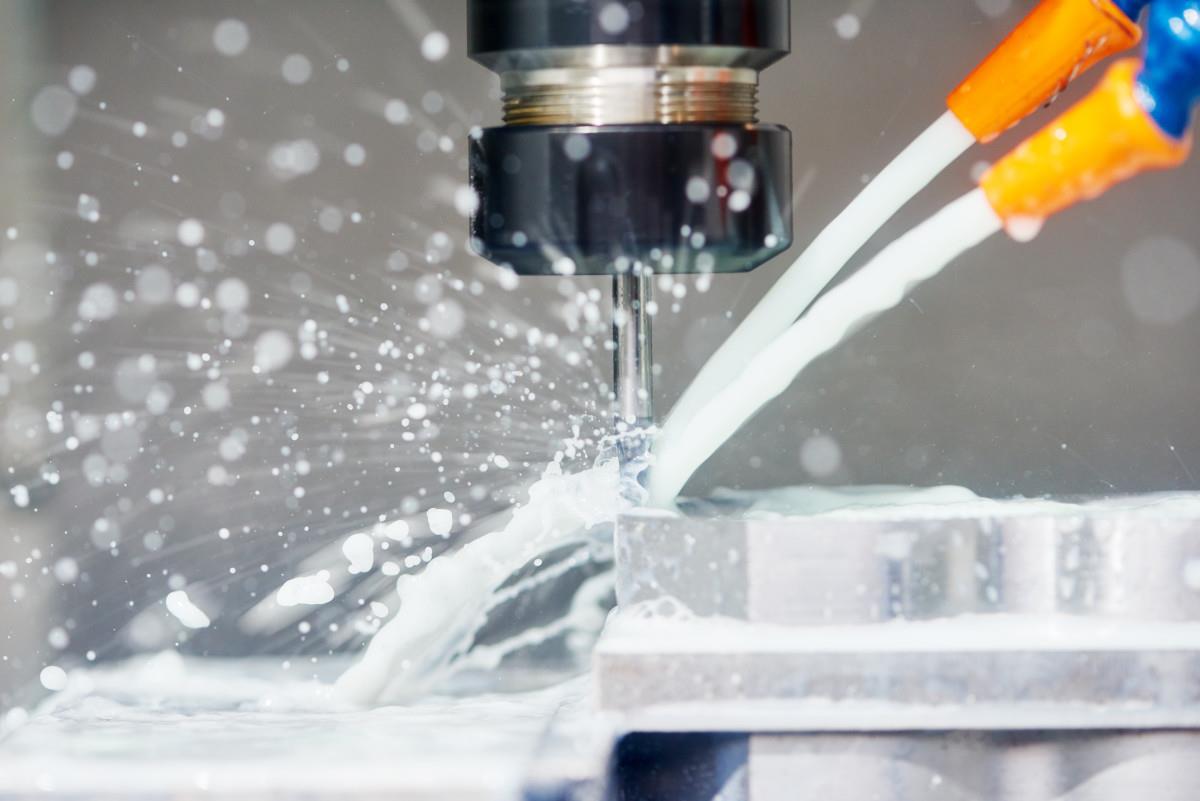
As mentioned above, aluminum has a high thermal conductivity. It gets hot when cut, and that heat can build up fast. This, in turn, can result in a finish with a smeared appearance, workpiece warpage, and leading edge build up (that gummy problem). Proper coolant flow will move chips away from the cutting zone and keep the cutting surfaces properly lubricated.
Aluminum is ductile, lightweight, thermally, and electrically conductive with excellent strength characteristics. With a few adjustments to machining techniques, it can be a great material for many parts and projects.