


CNC Turning Service
Why Choose Us
Our Certificate
ISO9001 & ISO14001 Certificated by SGS,IATF16949:2016 Certificated by SGS.
One-stop solution
Our expertise is in design and engineering, components manufacturing and supply chain management services. Our suite of solutions spans the entire product lifecycle – from design, Manufacturing Processes, through to delivery. By understanding the unique complexity of each customer's business, we develop customized solutions that drive product innovation, cost savings, supply chain efficiencies and improved time-to-market.
Minimize manufacturing costs
We partner with OEM companies helping them optimize their cost of manufacturing using our engineering and manufacturing services.
Our Service
We manage customers'product's complete lifecycle from development to delivery to support.
roduct technical advice, confirm user needs, provide users with complete solutions, etc.
CNC Turning is a manufacturing process in which bars of material are held in a chuck and rotated while a tool is fed to the piece to remove material to create the desired shape. A turret (shown center), with tooling attached is programmed to move to the bar of raw material and remove material to create the programmed result. This is also called “subtraction machining” since it involves material removal. If the center has both tuning and milling capabilities, such as the one above, the rotation can be stopped to allow for milling out of other shapes.
-
![CNC Machining Turning Parts]() CNC Machining Turning PartsPowerWinx is a manufacturer specializing in CNC machining of turning parts, offering precision parts with tight tolerances as low as ±0.01mm.read more
CNC Machining Turning PartsPowerWinx is a manufacturer specializing in CNC machining of turning parts, offering precision parts with tight tolerances as low as ±0.01mm.read more -
![CNC Lathe Turning Parts]() CNC Lathe Turning PartsTurning involves rotation of the workpiece while the cutting tool moves in a linear motion. This results in a cylindrical shape. A lathe is the machine of choice for all turning operations.read more
CNC Lathe Turning PartsTurning involves rotation of the workpiece while the cutting tool moves in a linear motion. This results in a cylindrical shape. A lathe is the machine of choice for all turning operations.read more -
![Aluminum CNC Turning Parts]() Aluminum CNC Turning PartsFor aluminum CNC turning parts during the CNC turning process, a aluminum rod is rotated while a cutting tool is held against the stock to remove material and create final parts.read more
Aluminum CNC Turning PartsFor aluminum CNC turning parts during the CNC turning process, a aluminum rod is rotated while a cutting tool is held against the stock to remove material and create final parts.read more -
![Aluminium Turning Parts]() Aluminium Turning PartsCNC turning is a manufacturing process where bars of material are held in a chuck and rotated while a tool is fed to the piece to remove material and create the desired shape.read more
Aluminium Turning PartsCNC turning is a manufacturing process where bars of material are held in a chuck and rotated while a tool is fed to the piece to remove material and create the desired shape.read more -
![Stainless Steel CNC Turning Parts]() Stainless Steel CNC Turning PartsStainless steel has large plasticity and high toughness. During CNC turning machining process, the energy consumption is large, and the cutting temperature of the cutting tool is high.read more
Stainless Steel CNC Turning PartsStainless steel has large plasticity and high toughness. During CNC turning machining process, the energy consumption is large, and the cutting temperature of the cutting tool is high.read more -
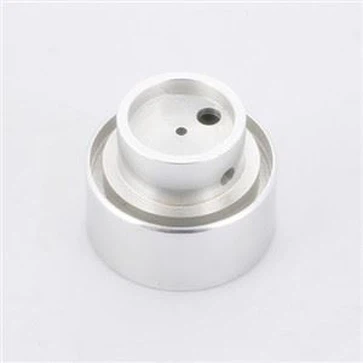
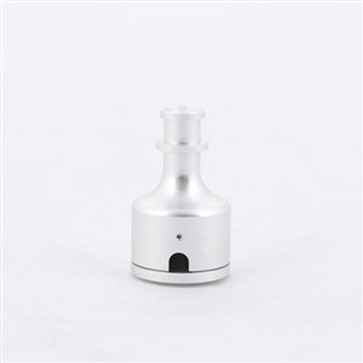
![CNC Precision Turning Parts]() CNC Precision Turning PartsIn CNC turning, the part is mounted on a rotating chuck, and material is removed using stationary cutting tools. This method allows for the manufacture of parts with symmetry along their center axis.read more
CNC Precision Turning PartsIn CNC turning, the part is mounted on a rotating chuck, and material is removed using stationary cutting tools. This method allows for the manufacture of parts with symmetry along their center axis.read more




Benefits of CNC Turning Service

Flexibility
Turning centers come in various sizes to accommodate your applications’ flexibility. The adjustment is rather easy because this machine’s tasks are preprogrammed. The operator can finish your component by making the necessary programming adjustments to your CAM program or even build something entirely different. Therefore, you can rely on the same precision CNC machining services company if you need many unique parts.
Accuracy
The CNC turning machine can execute exact measurements and eliminate human mistakes using CAD or CAM files. Experts can deliver incredibly high accuracy using cutting-edge machinery, whether for the production of prototypes or the completion of the entire production cycle. Every cut is precise since the machine being used is programmed. In other words, the final piece in the production run is identical to the first piece.


Safety
Manufacturing firms adhere to strict safety rules and regulations to guarantee complete safety. Since the turning machine is automatic, less labor is required because the operator is only there to monitor the machine. Likewise, the lathe body employs fully enclosed or semi-enclosed protective devices to avoid flying particles from the processed item and lessen harm to the crew.
Faster Results
There is a lower chance of error when tasks specified by programming are carried out on CNC lathes or turning centers. As a result, this machine can finish production more quickly without sacrificing the final output quality. Finally, you can receive the necessary components faster than with other options.

Types of CNC Turning Service Operations
Straight Turning
Straight turning involves using a cutting tool to cause a uniform reduction of the diameter of a workpiece. The technique aims to machine the material into a specified thickness. It quickly removes part of the material, preventing variation in the product diameter. It is sometimes referred to as rough turning, requiring extra finishing to obtain dimensional accuracy.
Knurling
This operation involves introducing cut patterns of serrated, angled, or crossed lines into the surface of a workpiece. The process typically introduces a firm grip, as the pattern enhances friction. It is also suitable for fabricating bolts and nuts for threaded holes. Notably, the operation may require the need for specially designed knurling tools.
Parting
Parting is a machining technique that uses a single-point cutting tool to create a deep gouge into a material, removing its internal components. As the name suggests, it results in producing parts or cuts off a section of the original piece.
Taper Turning
Taper turning involves gradually reducing a material’s diameter from one end to another. The angular motion between the material and the cutting tool causes the transition and reduction in the diameter of the workpiece. Like most turning operations, the end product is cylindrical shaped.
Application of CNC Turning Service
Automotive
Producing components like shafts, pistons, and gears, all of which need to meet exact specifications for proper vehicle function and durability.
Aerospace
Aircraft components, such as engine parts and landing gear, demand high precision and are often made from specialized materials. CNC turning ensures these parts meet the tight tolerances required for safety and reliability in flight.
Medical
In the medical industry, implants, surgical tools, and devices require extreme precision. The parts also need to be made from biocompatible materials for safe use in medical procedures.
Oil and Gas
Valves, pipes, and drilling equipment should endure harsh environments and high pressures. These components are made from materials designed to withstand extreme conditions, ensuring long-term strength and reliability.
CNC Turning vs. CNC Milling: How do They Compare?
Workpiece Motion: The Core Difference
The main difference between CNC turning and CNC milling lies in the workpiece motion. In CNC turning, the workpiece rotates while the cutting tool remains stationary. This process allows for the creation of axially symmetric parts with incredible precision and smooth finishes.
Versatility in Part Geometry
The versatility of CNC turning and CNC milling differs significantly, particularly when it comes to part geometry. While CNC turning excels at creating parts with axial symmetry, such as cylinders, cones, and disks, CNC milling offers a broader range of possibilities.With the ability to produce complex shapes, pockets, slots, and intricate 3D features, CNC milling is the go-to option for parts requiring more elaborate designs.
Achieving the Perfect Surface Finish
Both CNC turning and CNC milling can achieve high-quality surface finishes, but the nature of these finishes can vary. The continuous rotation of the workpiece in CNC turning typically results in a smoother, more polished finish.In contrast, CNC milling may leave a pattern of tool marks, depending on the milling strategy and cutting tool used. However, with the right tooling and parameters, CNC milling can also achieve excellent surface finishes.
Tooling and Setup: Time and Cost Considerations
When it comes to tooling and setup, CNC turning generally has the upper hand. Fewer tools are required, and the setup process is often quicker and more straightforward. In comparison, CNC milling may necessitate multiple tools to achieve the desired complex geometries, which can increase both setup time and cost.
Materials Used in CNC Turning Service
Aluminum
Aluminum alloys can be easily machined in large volumes. They offer an excellent strength-to-weight ratio, high thermal and electrical conductivity, and versatility. Aluminum alloy 6061 is often used for automotive and recreational components, while aluminum 7075 is better suited for high-performance aerospace applications.
Brass
Brass is one of the most popular materials used in CNC turning because it is easy to stamp, machine, and mold. It provides excellent thermal conductivity, ductility, corrosion resistance, and durability.
Bronze
Easy to machine, bronze is resistant to corrosion and saltwater.
Copper
Copper alloys are resilient and highly workable.
Cast iron
Cast iron can be machined two times faster than other types of steel. It is an abrasion-resistant material that is excellent at absorbing vibrations and reducing tooling wear.
Hastelloy
Hastelloy is also difficult to machine but not impossible. Our specialized experience in CNC turning this material yields results that can tolerate high-temperature, high-stress environments.
Look for long-term value, not just the cheapest price
When sending a processing order, you will invest in the company’s time and money. When choosing a supplier based on low prices alone, you may waste your time, money and energy. Especially when the company has a need for product accuracy, high-quality suppliers have equipment that can provide you with the required fine processing results, and they will also spend time establishing long-term cooperation with you to ensure that they exceed your expectations.
Whether Have Rich Experience
Machining service factoryChoosing a manufacturer that has been engaged in the CNC machining industry for a long time will save you a lot of trouble. The length of time the company conducts business can prove that your products and services are in good condition. Generally, the longer a company spends in CNC machining, the more machining experience and skills it acquires, and the greater the likelihood of meeting your requirements. In China, for traditional industries like CNC machining, companies with more than 10 years of experience will be a good start.
Make Sure They Have The Required Capacity
Before choosing a machining vendor for your business, make sure that the workshop has the functions required by your project. Ask about the type of equipment available. Does the company have the necessary skills and machine for milling, lathe grinding, WEDM, etc.? Do they have 3/4/5-axis machining center to handle complex machining projects?If your machining part is too large for the machine table, it may need manual machining services. The machining workshop should also provide these parts, especially if you only need a small amount of parts.
Whether Can Guarantee The Products Quality
Ask if the machining factory you want to use has equipment to check its products. If the answer is no, please find another factory.In the process of searching for a suitable CNC machined parts manufacturer, quality is our biggest concern. Before we know the quality of any product at hand, the best way is to study its quality control methods. In addition to ISO certification, companies should also have methods to monitor their products.
How Does CNC Turning Service Work?

Create a 2D or 3D CAD Model
The first step of the CNC milling process is to create 3D (or 2D) drawings of your desired part using CAD/CAM software like Autodesk Inventor, Fusion 360, and SolidWorks. These computer-aided design (CAD) or computer-aided manufacturing (CAM) tools allow you to specify your dimensions and tolerance requirements.

Convert the CAD Model to a CNC program
Export your CAD model into a CNC-compatible file using the CAM software we mentioned in stage #1. CAM tools have functionalities that allow you to convert your 3D CAD model into a computer program called G-code.The G-code then automates all the actions necessary to fabricate your part, for example, the cutting sequence, toolpath, machine tool speed, workpiece movement, to name a few.

Setup the CNC Milling Machine and Execute Milling Operation
This is the phase where you insert your workpiece into the CNC machine work surface, attach your cutting tools into the spindle of the CNC machine, and download the G-code you already created in stage 2.
our factory
PowerWinx is a professional provider of CNC turning services, offering precision machining solutions for a wide range of industries. With our advanced CNC turning equipment and experienced team of engineers and technicians, we deliver high-quality, accurate parts for various applications, including aerospace, automotive, electronics, and more. Our CNC turning services are capable of handling complex designs, tight tolerances, and a variety of materials such as aluminum, stainless steel, brass, and plastics. We specialize in producing both simple and intricate parts, with a focus on efficiency and consistency. At PowerWinx, we work closely with our clients to ensure that every project is tailored to their exact specifications, whether it’s for prototyping, low-volume production, or large-scale manufacturing. Our commitment to quality is evident in our stringent quality control processes, ensuring that every part meets or exceeds industry standards. We also pride ourselves on quick turnaround times and cost-effective solutions, making us a trusted partner for businesses seeking reliable CNC turning services. Whether for small or large batches, PowerWinx delivers precision and excellence in every project.
Certificate

FAQ
We're professional cnc turning service manufacturers and suppliers in China, specialized in providing high quality customized products. We warmly welcome you to wholesale cost-efficient cnc turning service for sale here from our factory. For price consultation, contact us.
on time die casting delivery, epoxy floor cnc machining, die casting production