


Introduction to Lightweight Manufacturing
The demand for lightweight components has grown significantly due to stricter environmental regulations, rising fuel costs, and consumer expectations for efficiency. Reducing weight in vehicles, aircraft, and consumer electronics not only saves energy but also enhances performance and reduces emissions. Magnesium, known as the lightest structural metal, has emerged as a key material in this field.
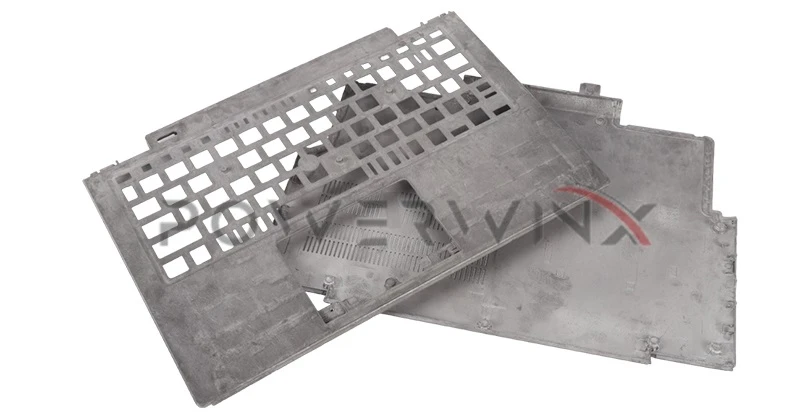
Laptop housing made by magnesium die casting
Magnesium Die Casting
Magnesium die casting is a process where molten magnesium is injected into steel molds under high pressure. It is widely used for producing complex shapes with thin walls while maintaining excellent mechanical strength. Industries prefer magnesium die casting because it combines lightweight benefits with mass production efficiency.
Advantages of Magnesium Die Casting
1. Lightweight strength: Magnesium has a density one-third that of aluminum, making it the lightest choice for structural applications without compromising strength.
2. Complex shapes: The die casting process allows for the creation of intricate geometries and thin walls that would be difficult or expensive to achieve through machining.
3. High-volume efficiency: Once the tooling is made, magnesium die casting produces thousands of identical components at low per-unit costs.
4. Good dimensional stability: Magnesium die casting ensures tight tolerances and consistent repeatability for large-scale production.
5. Thermal and electromagnetic performance: Magnesium parts offer excellent heat dissipation and electromagnetic shielding, making them ideal for electronic housings and automotive parts.
Limitations of Magnesium Die Casting
1. Tooling cost: The initial investment for die casting molds is high, which can be uneconomical for small production runs or prototyping.
2. Potential defects: Issues such as porosity, surface finish problems, and flash may require secondary operations.
3. Limited design flexibility: Once a die is manufactured, altering the design involves significant costs and time.
CNC Machining for Lightweight Components
CNC machining is a subtractive process that uses computer-controlled tools to remove material from a solid magnesium billet or block. It is renowned for its precision and flexibility, especially in industries that require high-performance components with tight tolerances.
Advantages of CNC Machining for Magnesium Components
1. Superior precision: CNC machining achieves high accuracy, making it suitable for parts that demand exact dimensions and smooth finishes.
2. Design flexibility: Modifications can be made quickly by updating software programs without requiring new tooling, making it ideal for prototypes and custom projects.
3. Wide material compatibility: CNC machining supports various magnesium alloys and can integrate hybrid materials if necessary.
4. Elimination of casting defects: Unlike die casting, CNC machining avoids porosity, shrinkage, and inclusions, ensuring defect-free components.
5. Excellent surface quality: Machined magnesium components often require minimal finishing, making them suitable for cosmetic and functional applications.
Limitations of CNC Machining for Magnesium Components
1. Higher per-unit cost: CNC machining is slower and less efficient than die casting for large-scale production.
2. Material waste: Being a subtractive process, CNC machining generates more scrap material compared to die casting.
3. Fire risk: Magnesium is flammable in fine chip form, requiring special precautions and equipment for safe machining.
Magnesium Die Casting vs. CNC Machining: Detailed Comparison
1. Production Volume: Die casting is ideal for high-volume production, while CNC machining is better for low to medium runs or specialized applications.
2. Cost Efficiency: Die casting offers economies of scale once tooling is in place, while CNC machining is more cost-effective for prototyping and low-volume batches.
3. Design Flexibility: CNC machining allows quick modifications, whereas die casting requires costly tooling changes.
4. Tolerances and Accuracy: CNC machining excels in achieving tighter tolerances compared to die casting.
5. Surface Finish: Die casting may need post-processing for smoother surfaces, while CNC machining generally delivers a superior finish directly.
6. Material Utilization: Die casting uses material efficiently with near-net shapes, while CNC machining generates more waste.
7. Defect Management: CNC machining avoids casting defects, but die casting can be combined with machining to remove imperfections and enhance accuracy.
Applications of Magnesium Die Casting
1. Automotive: Gearbox housings, steering components, and brackets where lightweight strength is essential.
2. Aerospace: Structural elements, seat frames, and casings requiring weight reduction without sacrificing safety.
3. Electronics: Mobile phone frames, laptop housings, and other enclosures demanding electromagnetic shielding and durability.
4. Industrial equipment: Lightweight housings and structural components for improved efficiency and portability.
Applications of CNC Machined Magnesium
1. Aerospace: Precision components such as turbine housings and avionics parts where tight tolerances are critical.
2. Medical devices: Lightweight surgical instruments and imaging equipment housings requiring defect-free precision.
3. Prototyping: Custom parts for testing and validation before mass production.
4. High-end electronics: Premium casings and enclosures with superior cosmetic finishes.
Hybrid Approach: Combining Die Casting and CNC Machining
Many manufacturers adopt a hybrid approach to balance efficiency and precision. Magnesium die casting is used to produce the overall shape of the component quickly, followed by CNC machining to refine critical surfaces, add threading, or meet strict tolerance requirements. This approach reduces waste, lowers overall costs, and ensures superior quality.
Future Trends in Lightweight Component Manufacturing
Conclusion
Magnesium die casting and CNC machining are both powerful methods for producing lightweight components, each with distinct strengths and limitations. Die casting is unmatched for high-volume, cost-effective production of complex shapes, while CNC machining excels in precision, flexibility, and defect-free outcomes. Manufacturers often combine both processes to maximize efficiency, performance, and cost-effectiveness, making magnesium one of the most versatile materials for lightweight applications.
PowerWinx is a leading manufacturer specializing in magnesium die casting, CNC machining, and thermal management solutions. With years of expertise, the company delivers high-quality, lightweight, and durable components for industries including automotive, aerospace, electronics, and medical. PowerWinx is committed to innovation, precision, and sustainability, providing global manufacturers with reliable and cost-effective solutions tailored to their specific needs.
